

In the digital age, data analysis has become a real performance driver for businesses, regardless of their size or sector. By collecting and leveraging information from various sources (websites, social media, business software, CRM, etc.), companies can make more informed decisions, anticipate trends, and better understand their customers.
What is data analysis?
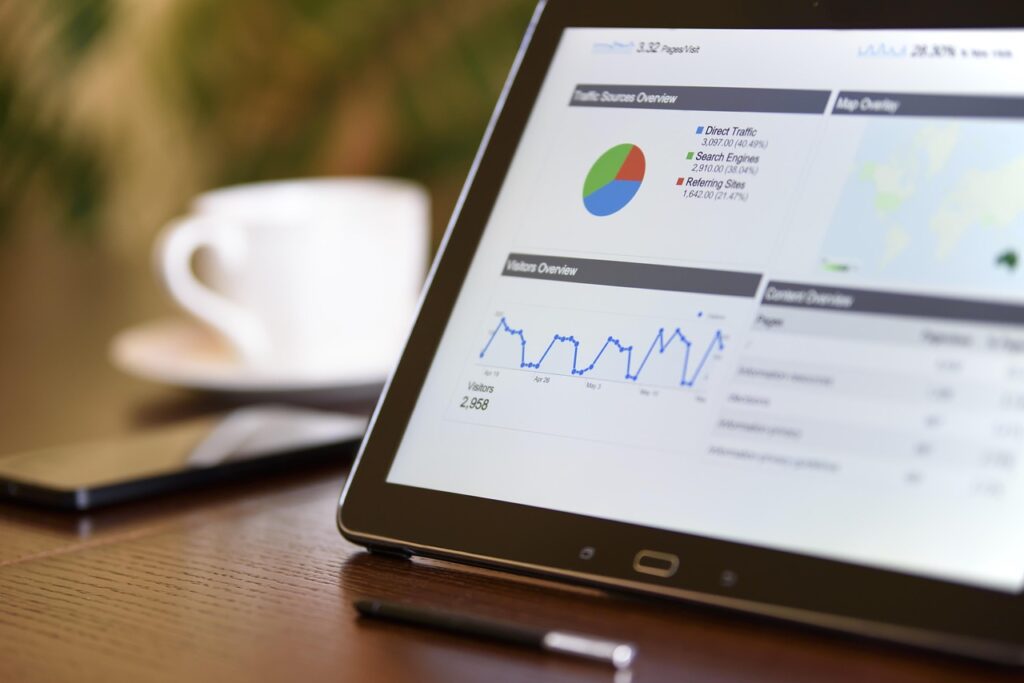
Data analysis involves extracting useful information from large volumes of raw data. It transforms figures and statistics into relevant insights that can be used to guide a company’s strategy. These analyses can be descriptive (what happened?), predictive (what will happen?) or prescriptive (what should we do?).
What is the purpose of data analysis in a company?
Data analysis in business plays several strategic roles:
1. Get to know your customers better
Thanks to data collected through online interactions, surveys, or purchase histories, companies can build accurate profiles of their customers. This allows them to tailor their offerings, personalize communications, and improve the customer experience.
2. Optimize internal processes
By analyzing internal performance (production, logistics, human resources, etc.), companies can identify sources of waste, pinpoint inefficiencies, and optimize their resources. This often results in reduced costs and improved productivity.
3. Make decisions based on facts
No more relying on instinct or intuition: with data analysis, managers can make informed decisions based on real data. This increases responsiveness and reduces the risk of strategic errors.
4. Anticipate market trends
Data from social media, market research, and competitive intelligence can be used to anticipate market developments and adapt products or services accordingly.
5. Improve digital marketing
In marketing, data is essential for measuring campaign performance, identifying the most effective channels, and adjusting strategies in real time. SEO, online advertising, and social media rely heavily on performance indicators that can only be interpreted through proper analysis.
How to get started with data analysis?
To effectively integrate data analysis into a business, several steps are necessary:
- Define the objectives: what are we trying to understand or improve?
- Collect relevant data using the right tools (Google Analytics, CRM, business software, etc.).
- Clean and organize data to ensure its reliability.
- Analyser les données à l’aide d’outils adaptés (Excel, Power BI, Tableau, etc.).
- Interpret the results to derive concrete actions.
FSLI GROUP supports you
At FSLI GROUP, we help companies leverage their data to improve their performance. Whether you need to set up a dashboard, analyze marketing performance, or optimize internal processes, our team of experts will guide you every step of the way.
Would you like to leverage your data to better manage your business? Contact FSLI GROUP today for a free assessment and benefit from our expertise in data analysis and digital transformation.
Data analysis in company is no longer a luxury, but a necessity in a world where every decision can have a decisive impact. By integrating it into your strategy, you are putting all the odds in your favor to remain competitive and innovative.